
A contract review tells you what a document says. Risk analysis tells you what it could cost you: the uncapped indemnity, the auto-renewal that locks you in for another year, the liability cap that vanished somewhere in the counterparty's third redline. AI contract risk analysis software is built for that second job. It scores agreements, flags risky and non-standard clauses, and shows where your exposure sits, whether that is one contract on your desk or thousands in a repository.
This guide compares six tools that do risk work well, from a $19.99/month browser app to six-figure enterprise platforms. For each you get verified pricing, the risk capabilities that genuinely differ between products, and honest cons. Where risk analysis sits in the wider landscape: it is the pre-signature scoring-and-flagging discipline, narrower than general markup and broader than a single clause check. If you want the umbrella category, including tools that summarize and answer questions about contracts without scoring risk, see our companion guide to the best AI contract review tools; if the goal is extracting everything a single agreement contains rather than just its exposure, our contract analysis software roundup is the better list.
AI contract risk analysis software: a brief overview
- LegesGPT: Best overall: flags risky and non-standard clauses, explains each one in plain language, and proposes a fix you can accept or refine, from $19.99/month.
- ThoughtRiver: Best for automated risk scoring at volume: interrogates every inbound contract against pre-trained legal questions so only the risky ones reach a lawyer.
- Luminance: Best for non-standard clause detection at enterprise scale: first-pass markup that spots deviations and suggests compliant wording across big legal teams.
- LexCheck: Best for playbook deviation flags: checks every contract in Word against your preferred positions and generates the redlines.
- Legartis: Best for multilingual European risk detection: finds risks and deviations in all European languages with EU/Swiss data hosting.
- Ironclad: Best for portfolio-wide risk exposure: a CLM whose AI surfaces risky terms from intake through post-signature obligations.
| Tool | Best for | Starting price | Free trial | Coverage |
|---|---|---|---|---|
| LegesGPT | Plain-language risk flags with proposed fixes | From $19.99/mo | 3-day for $1 | 38+ countries |
| ThoughtRiver | Risk scoring and triage at volume | From £15,000/yr | 28-day | English-first |
| Luminance | Non-standard clause detection at scale | Custom | Demo only | Multi-language |
| LexCheck | Playbook deviation flags in Word | Custom | Free trial | English (Word) |
| Legartis | Multilingual European risk detection | From CHF 250/user/mo | Free tier (2 contracts/mo) | All European languages |
| Ironclad | Portfolio-wide risk exposure | Custom | Demo only | Global enterprises |
1. LegesGPT, best overall for risk flags with proposed fixes
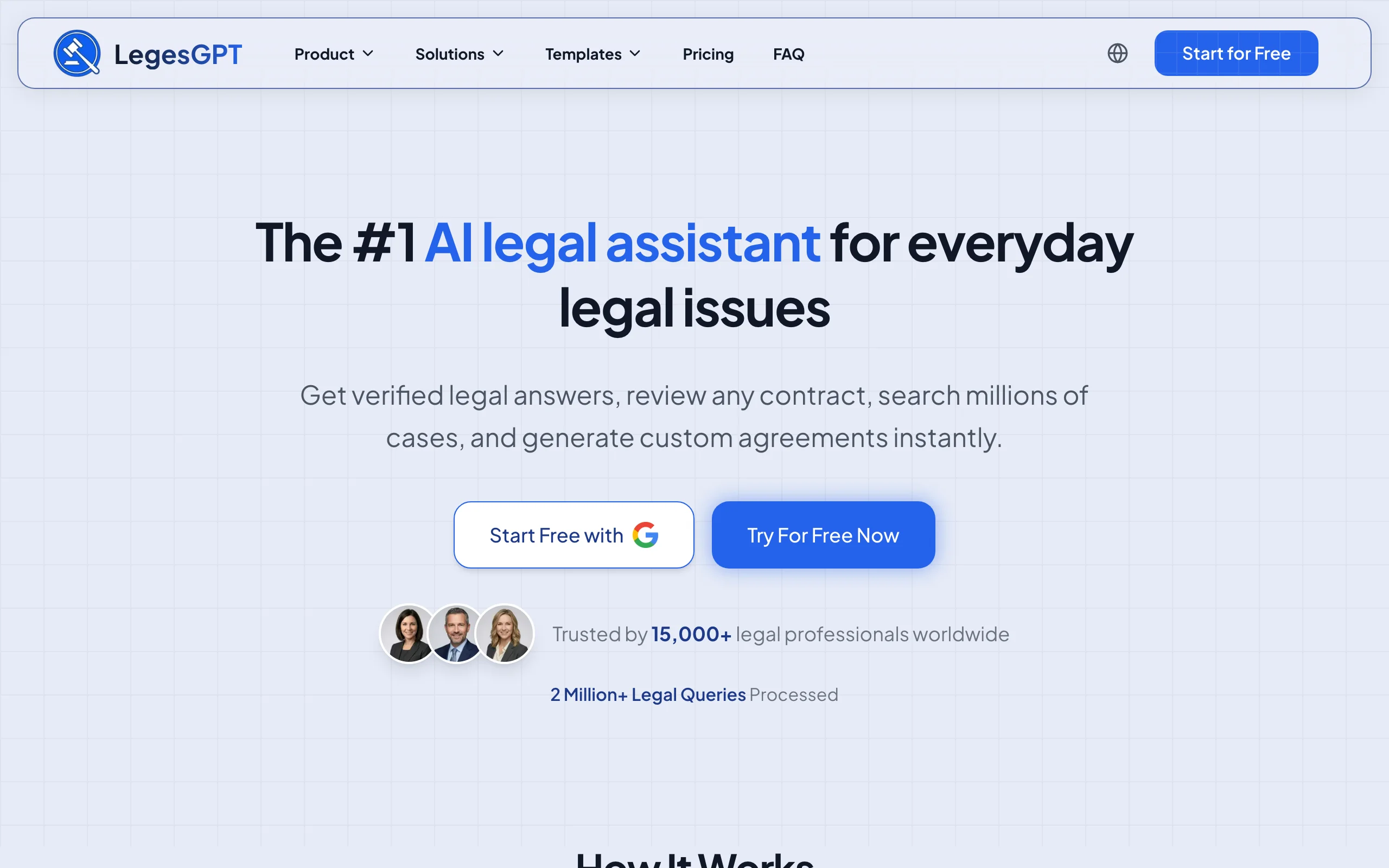
Most risk tools stop at highlighting. LegesGPT closes the loop. Upload a contract as a PDF, DOCX, PPTX, TXT, or even a photographed page, and it flags the risky and non-standard clauses, explains in plain English why each one is a problem, and drafts the specific change to request. You can accept the proposed language as written or refine it before it goes back to the counterparty, which turns a review report into a negotiation position.
The follow-up work stays in the same tab. If an unusual limitation-of-liability clause makes you nervous, ask how it holds up in your jurisdiction and you get an answer with verified citations, backed by case law and statute search. Once the terms are fixed, you can redraft the document and e-sign it in the same workspace. Everything runs in the browser with no IT setup.
Key features
- Risky and non-standard clause detection with a plain-language reason attached to every flag
- Proposed replacement wording per flagged clause, ready to accept, edit, or reject
- Handles indemnity, liability caps, auto-renewal, termination, arbitration, and confidentiality terms in commercial contracts and NDAs
- Cited answers to follow-up legal questions, plus case law and statute search to check how a clause plays out in your jurisdiction
- AI drafting, 100+ attorney-drafted templates, and built-in e-signature to finish the corrected contract
- Deep Research mode and web search on the top plan for unusual or multi-step questions
Best for
- Solo practitioners and small firms screening client contracts before signature
- In-house teams of one to five people who need every inbound agreement checked without enterprise procurement
- Founders and operations leads signing vendor and customer paper without in-house counsel
Pricing
- Basic: $19.99/month for AI legal questions with citations and case law search; Plus: $49.99/month adds document upload and 50 reviews per month
- Premium: $99.99/month for unlimited reviews, Deep Research, and web search
- 3-day trial for $1, and roughly 30% off with annual billing
Pros
- Every flag ships with suggested replacement language, so the output is negotiation-ready rather than a highlighted PDF
- A small fraction of enterprise platform cost, with no seat minimums or sales cycle
- Risk analysis, legal research, drafting, and e-signature in one subscription
Cons
- Web only: no Word add-in, public API, or native mobile app, so Word-centric reviewers switch windows
- Newer brand without the decade-long enterprise track record of Luminance or Ironclad
2. ThoughtRiver, best for automated risk scoring and triage
ThoughtRiver answers one question at scale: which of this week's inbound contracts actually need a lawyer. Its Lexible engine reads each agreement clause by clause and evaluates it against thousands of pre-trained legal questions, producing a structured risk assessment with remediation guidance. Low-risk paper gets routed around the legal queue entirely, so human attention concentrates on the contracts that deserve it. The company reports that complex agreements are assessed in under three minutes, work that takes hours by hand.
It is a screening engine, not a general assistant. That focus is exactly why high-volume teams buy it, and why light users should look elsewhere.
Key features
- Clause-level risk scoring against thousands of pre-trained legal questions
- Automated triage that lets safe contracts skip the legal review queue
- Remediation guidance explaining how to resolve each flagged issue
- Consistent issue lists and risk summaries for repeatable screening across reviewers
Best for
- In-house teams screening 20 or more inbound contracts a month, mostly on counterparty paper
- Legal ops leaders who need to show measurable turnaround-time improvements
Pricing
- Professional: from £15,000/year, sized for 20 to 50 contracts a month
- Enterprise: from £30,000/year for higher volumes
- 28-day free trial
Pros
- Purpose-built risk triage rather than generic document Q&A
- Publishes entry pricing, which is rare among enterprise contract AI vendors
Cons
- The £15,000 floor only makes sense at real volume; occasional users pay a steep per-contract rate
- Screening only: you still need separate tools for drafting and research
3. Luminance, best for non-standard clause detection at enterprise scale
Luminance is an enterprise legal AI platform used by more than 1,000 organizations, including Big Four accounting firms and multinational corporates. Its risk workflow takes the first pass on any contract in negotiation: it highlights risk areas, detects clauses that deviate from your standard positions, and suggests compliant alternative wording. A validation architecture the company calls its Panel of Judges cross-checks AI outputs before they land in your redline, which matters when the markup feeds high-stakes transactions.
It works inside Microsoft Word as well as the browser, and it scales to portfolio-level analysis, which made its name in M&A due diligence across large document sets.
Key features
- Automated first-pass markup highlighting risk across negotiated contracts
- Non-standard clause detection with suggested compliant alternatives
- Cross-validated AI outputs via a mixture-of-experts architecture
- Word integration plus portfolio-level insight across a large contract estate
Best for
- Large legal departments standardizing first-pass markup across many lawyers
- Firms running high-volume, high-stakes transactional work such as M&A diligence
Pricing
- Custom only (contact sales); no published pricing
- Third-party benchmarks place mid-size deployments in the five-to-six-figure annual range, with implementation often adding 20 to 50% of the first-year license
Pros
- Accuracy safeguards and deployment options (including on-premises) built for enterprise risk tolerance
- Consistent markup quality across teams, languages, and jurisdictions
Cons
- Enterprise pricing and procurement lock out small teams
- Real implementation effort before the value shows up
4. LexCheck, best for playbook deviation flags and instant redlines
LexCheck automates the question every negotiation playbook exists to answer: does this contract match our positions, and if not, what do we change. Load your preferred and fallback positions, and LexCheck reviews each agreement inside Microsoft Word, flags language that deviates from the playbook, explains its reasoning, and generates the corrective redlines, typically within minutes. Customers including NetApp and RSM report substantially faster deal cycles.
It is deliberately narrow. LexCheck does playbook-driven markup and little else, which makes it excellent for standardized paper and a poor fit for one-off bespoke agreements.
Key features
- Custom playbooks capturing preferred and fallback negotiation positions
- Deviation flags with transparent reasoning for every issue raised
- Automatic redline generation in native Word documents
- Playbook setup measured in minutes, not implementation months
Best for
- In-house teams that already run written playbooks for NDAs, MSAs, or procurement contracts
- High-volume sales and procurement contracting where consistency matters more than bespoke judgment
Pricing
- Custom (contact sales); no published prices
- Reported model is a flat annual fee per playbook with unlimited users and volume (per the LawNext directory); a free trial is offered
Pros
- Per-playbook pricing scales well when many users work from few contract types
- Produces redlines, not just flags, so reviewers start from a corrected draft
Cons
- Value depends on having, or building, a real playbook first
- Word-centric, with no browser-first workflow
5. Legartis, best for multilingual risk detection with EU data residency
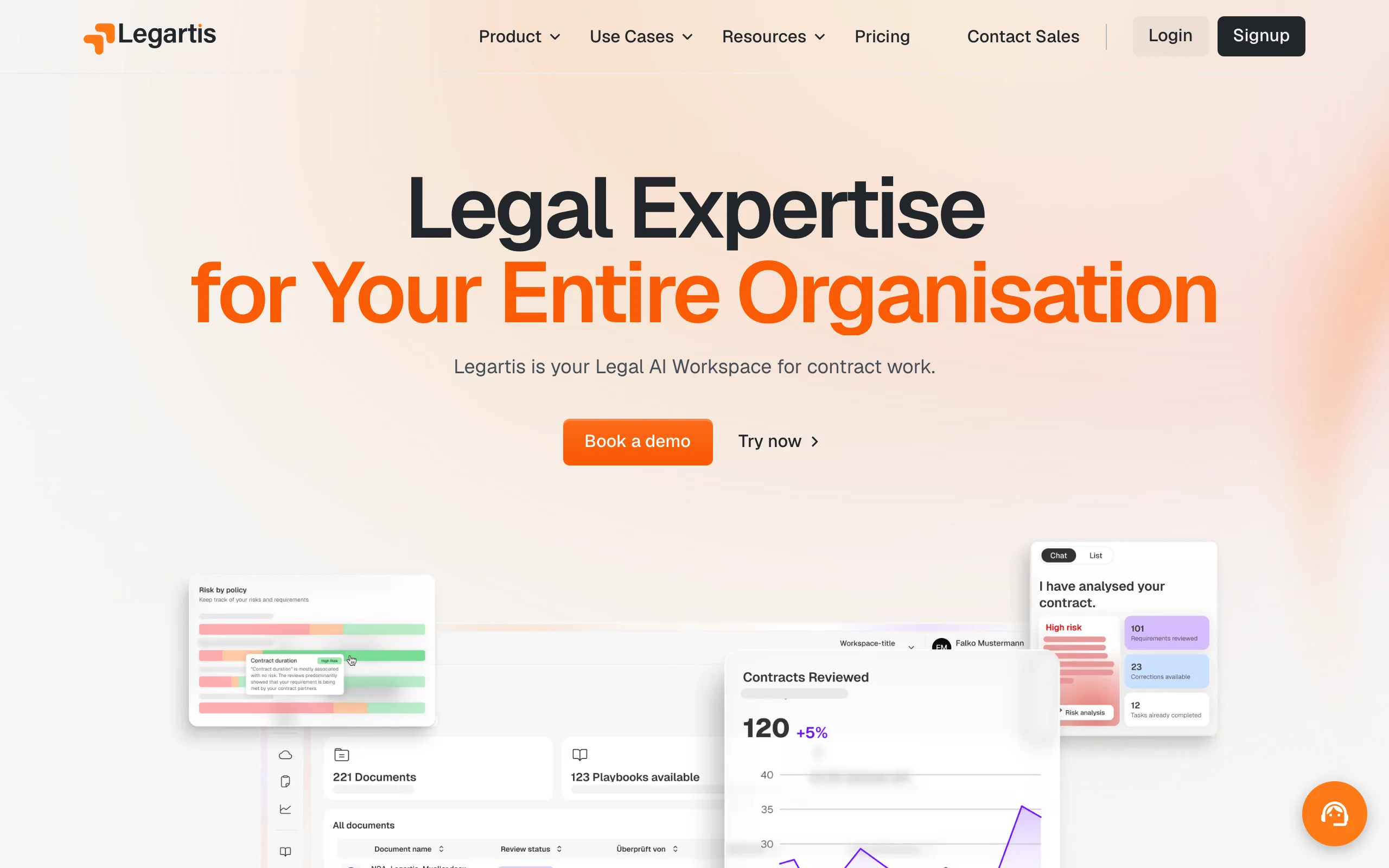
Legartis is a Swiss legal AI platform whose review agent detects risks and playbook deviations automatically, and it differentiates on two axes that matter to European teams: language and data residency. It analyzes contracts in all European languages, and all servers sit in Switzerland and the EU with ISO 27001 certification. Its Contract Insights dashboards go beyond single-document flags to track risks, deadlines, and critical clauses across your whole portfolio, and a playbook builder learns review standards from your feedback.
Deployment is flexible: a web app for occasional users, a Word app for negotiators, and a REST API for embedding checks into other systems.
Key features
- Automatic risk and deviation detection against configurable playbooks
- Contract analysis in all European languages for cross-border work
- Portfolio dashboards tracking risks, deadlines, and critical clauses
- Web app, Word app, and REST API deployment options
- Swiss and EU hosting with ISO 27001 certification
Best for
- European in-house teams reviewing contracts in German, French, and other EU languages
- Organizations where sales and procurement staff run first-pass checks before legal steps in
Pricing
- Free plan: 2 contracts per month, 1 seat, with an NDA best-practice playbook
- Professional: CHF 250/user/month (billed CHF 2,500/year) for 120 contracts a year and 3 custom playbooks; Team: CHF 3,000/user/year for 250 contracts and 5+ seats
- Enterprise: custom, for 500+ contracts a year
Pros
- A genuine free tier for testing on real contracts before you commit
- The strongest multilingual coverage in this roundup
Cons
- Per-user annual pricing climbs quickly as the team grows
- Volume caps on paid tiers force upgrades as usage increases
6. Ironclad, best for risk exposure across a contract portfolio
Every other tool on this list analyzes contracts one at a time. Ironclad's risk case is the aggregate: as a contract lifecycle management (CLM) platform, its AI flags risky clauses during negotiation, then keeps tracking obligations, renewals, and non-standard terms across every agreement in the repository after signature. The workflow designer routes high-risk contracts to the right approver automatically, and repository-wide search means you can answer "how many of our signed MSAs have uncapped liability" in one query.
Choose it when the problem is not a risky contract but an unmanaged portfolio of thousands. For more tools built around repository-level analytics, see our guide to the best contract intelligence software.
Key features
- AI clause extraction and risk flagging across the entire contract repository
- Workflow automation that routes high-risk agreements to the right approvers
- Post-signature tracking of obligations, renewals, and non-standard terms
- AI-assisted markup during negotiation
Best for
- Legal ops teams building a system of record for company-wide contracting
- Companies whose largest exposure hides in signed contracts nobody is monitoring
Pricing
- Custom (contact sales); no published pricing
- Vendr marketplace data reports first-year quotes commonly between $40,000 and $80,000 for 500 to 2,000 contracts a year, with AI features often quoted as a separate line item
Pros
- Risk visibility continues after signature, across the full portfolio
- Workflow automation stops risky contracts slipping through unreviewed
Cons
- An implementation project measured in months, not a tool you adopt in an afternoon
- Total cost, platform plus AI add-ons, sits far above point solutions
How to choose the best AI contract risk analysis software for your practice
Four decisions narrow six tools down to one.
Match the tool to your monthly contract volume
- If you screen a handful of agreements a month: LegesGPT Plus at $49.99/month covers 50 reviews, and Legartis's free tier lets you test two.
- If you handle 20 to 50+ inbound contracts monthly: ThoughtRiver's triage model or LexCheck's playbook automation start to justify five-figure annual spend.
- If the exposure spans thousands of signed contracts company-wide: that is CLM territory, meaning Ironclad.
Decide what output you need: scores, flags, or fixes
- If you want a risk score that decides whether a lawyer looks at all: use ThoughtRiver.
- If you want deviations from your playbook turned into redlines: use LexCheck or Luminance.
- If you want each risk explained in plain language with proposed wording you can accept or refine: use LegesGPT.
Check where the analysis has to live
- If your reviewers negotiate in Word all day: Luminance, LexCheck, and Legartis's Word app keep flags inside the document.
- If you want zero installs and no IT sign-off: LegesGPT runs entirely in the browser; Legartis also offers a web app.
- If non-lawyers in sales or procurement will run first-pass checks: prioritize the simplest interface they will actually use, and see our picks for in-house legal teams for adjacent tooling.
Do the price-per-contract math before you commit
- £15,000/year at 30 contracts a month works out to roughly £42 per contract; LegesGPT Premium at $99.99/month with unlimited reviews drops below $1 at the same volume. Neither number is inherently right, but you should know yours.
- Prefer tools whose flags come with proposed fixes; drafting the counter-position is where the real time goes.
- Test with 3 to 5 of your own recent contracts during a trial. Most tools look alike in a demo and very different on your actual paper.