
Legal work is shifting from AI that answers questions to AI that does the work. The newest legal AI agents plan multi-step tasks, pull from authoritative sources, draft and review documents, then hand back finished work for you to check. Instead of a chatbot you prompt line by line, an agent takes an assignment ("review this lease and flag the risky clauses") and runs the whole job.
For lawyers, that means faster research, quicker contract turns, and fewer hours lost to routine drafting, as long as you verify the output before relying on it. This guide compares the 11 best legal AI agents in 2026. For each tool you get what it does, who it fits, current pricing, and honest pros and cons, followed by a framework to choose the right one for your practice.
Best legal AI agents: a brief overview
Different agents are built for different firms. Here is the quick map before the deep dive.
All-in-one for solo and small firms
- LegesGPT: Best overall: an agent that answers with verified citations, reviews documents and proposes fixes, searches case law, and drafts and signs, all in one self-serve subscription.
- Paxton AI: Best self-serve US research agent with transparent, published pricing.
- Eve: Best for plaintiff-side and personal injury firms that want agents for intake, demands, and discovery.
Enterprise and BigLaw
- Harvey AI: Best for BigLaw and large enterprise legal teams running custom agents at scale.
- CoCounsel (Thomson Reuters): Best for research-driven firms anchored in Westlaw and Practical Law.
- Hebbia: Best for due diligence and analysis over massive document sets.
- Lexis+ AI: Best for teams standardized on LexisNexis content.
Contract specialists
- Robin AI: Best for high-volume contract review.
- Spellbook: Best for contract drafting and redlining inside Microsoft Word.
- Luminance: Best for enterprise-wide contract automation and negotiation.
- Legora: Best for collaborative, multi-document review across teams.
| Tool | Best for | Starting price | Free trial | Coverage |
|---|---|---|---|---|
| LegesGPT | All-in-one for solo & small firms | From $19.99/mo | 3-day, $1 | 38+ countries |
| Harvey AI | BigLaw & enterprise legal teams | Custom (enterprise) | Demo only | Global |
| CoCounsel | Westlaw-anchored research firms | Custom | Demo only | US, UK + |
| Legora | Collaborative multi-doc review | Custom | Demo only | EU, US + intl |
| Hebbia | Diligence over huge doc sets | Custom (enterprise) | Demo only | Global |
| Robin AI | High-volume contract review | Free tier; Pro $100/user/mo | Free tier | US, UK + |
| Spellbook | Drafting inside Microsoft Word | Quote-based (~$99+/user/mo) | Demo only | US & Canada + |
| Paxton AI | Self-serve US research | $499/user/mo | 7-day | US (50 states) |
| Luminance | Enterprise contract automation | Custom | Demo only | Global |
| Lexis+ AI | LexisNexis-standardized teams | Custom (add-on) | Demo only | US + intl |
| Eve | Plaintiff & personal injury firms | Custom | Demo only | US |
1. LegesGPT, best overall for solo and small firms
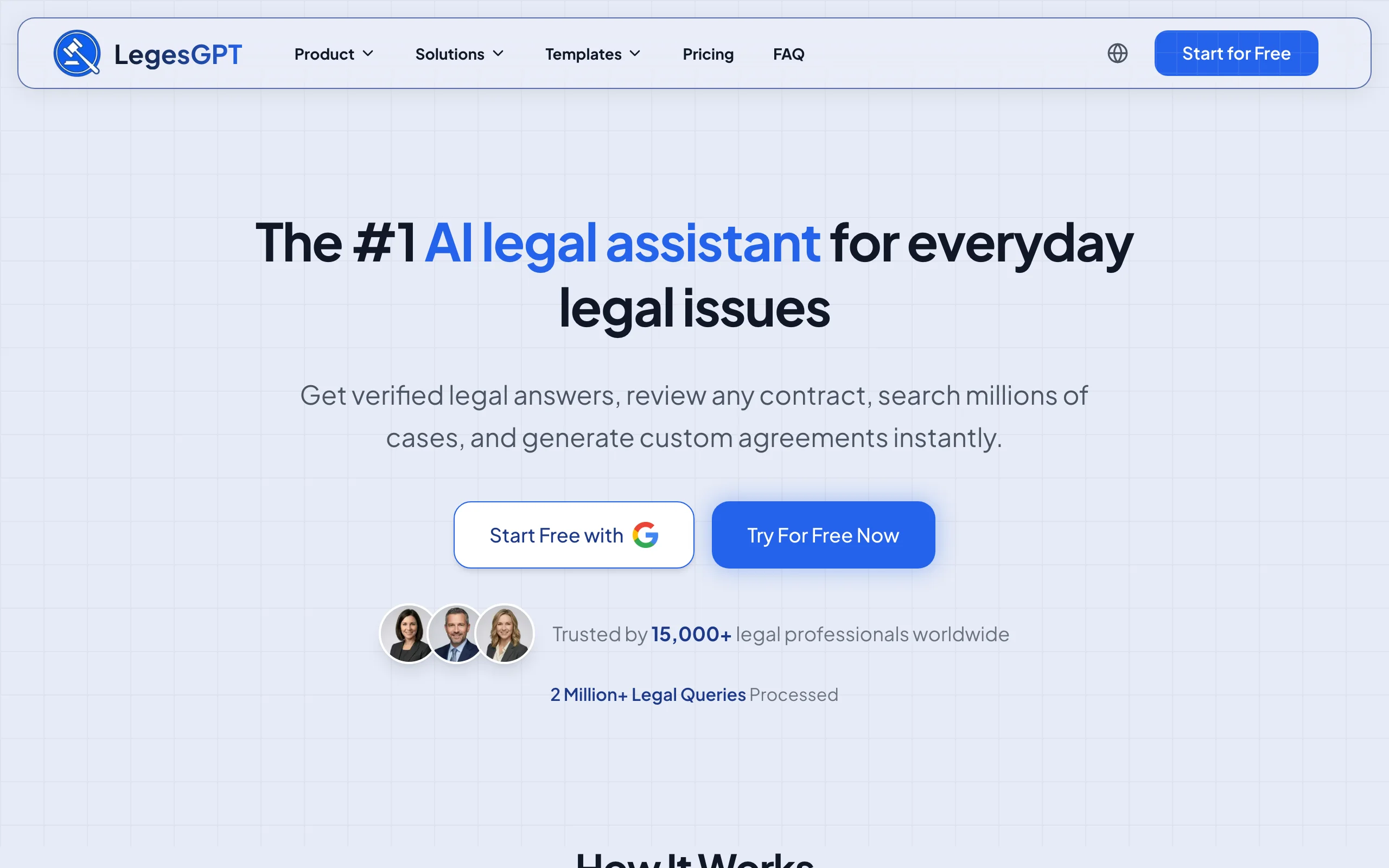
LegesGPT is an all-in-one legal AI agent built for solo practitioners and 2-50 attorney firms. Rather than specializing in one task, it runs the everyday legal workflow end to end: it answers legal questions with verified citations and direct source links, reviews uploaded documents to flag risks and propose changes, searches case law and statutes, drafts contracts and documents, and lets you sign and send them. A Deep Research mode handles multi-step questions, and web search keeps answers current.
The draw is doing all of that without an enterprise sales cycle. You sign up, start a 3-day trial for $1, and have research, review, and drafting in one subscription at a price a solo attorney can absorb.
Key features:
- Answers legal questions with verified citations and direct links to the source
- AI document review (PDF, DOCX, PPTX, images): flags risky clauses and proposes edits
- Case law and statute search with citation checking
- AI drafting for contracts and legal documents, plus e-signature
- Deep Research mode and web search for recent developments
- Free tools: contract generator, citation generator, and legal calculators
Best for:
- Solo and small-firm lawyers who want one tool instead of five
- In-house counsel and legal ops handling research, review, and drafting
- Paralegals and law students who need verifiable, cited answers
Pricing:
- Basic: $19.99/mo (unlimited AI queries, case law & statute search, citation verification)
- Plus: $49.99/mo (adds document upload and 50 document reviews/month)
- Premium: $99.99/mo (adds unlimited review, Deep Research, and web search)
- 3-day trial for $1; roughly 30% off with annual billing. See current LegesGPT plans and pricing.
Pros:
- One subscription covers research, review, drafting, and signing
- A fraction of the cost of enterprise legal AI, with no seat minimums
- Self-serve with verified citations you can click through and check
Cons:
- Newer brand with a smaller footprint than Westlaw or LexisNexis
- Web-based, with no native Word add-in or public API yet
2. Harvey AI, best for BigLaw and enterprise legal teams
Harvey AI is the agent platform of choice for large law firms and enterprise legal departments. In 2026 it has moved well past chat: customers build and run custom agents, including long-horizon agents that handle multi-step matters like fund formation, antitrust filing analysis, and loan document review. Harvey reports that tens of thousands of custom agents run on the platform across firms such as Allen & Overy, Freshfields, and PwC Legal.
It is powerful and deeply integrated, but it is sold as an enterprise platform, not a self-serve tool.

Key features:
- Custom agents for M&A, due diligence, drafting, and document review
- Long-horizon agents that execute complex, multi-step workflows
- Firm knowledge integration and workflow builders
- Enterprise security and admin controls
Best for:
- BigLaw and Am Law firms with dedicated innovation teams
- Large in-house legal departments standardizing on one platform
Pricing:
- Custom, enterprise-only; no public pricing and no self-serve trial
- Third-party estimates put deployments in the tens to hundreds of thousands per year, with per-seat minimums
Pros:
- Among the most capable agent platforms for complex, high-value work
- Built for firm-wide deployment with strong security and support
Cons:
- Out of reach for solo and small firms on price and procurement
- Requires a sales cycle and internal change management to adopt
3. CoCounsel, best for Westlaw-anchored research firms
CoCounsel, from Thomson Reuters, is a rebuilt agentic platform that plans research, selects tools, and retrieves authoritative content the way a senior associate would. Its real advantage is native access to Westlaw, Practical Law, and KeyCite, so its agents reason over content most firms already trust. Deep Research generates multi-step research plans with transparent reasoning and citation-backed reports, and Tabular Analysis reviews high volumes of documents in a sortable grid.
If your firm already lives in the Thomson Reuters ecosystem, CoCounsel is the natural agent to layer on top.
Key features:
- Agentic Deep Research grounded in Westlaw and Practical Law
- Tabular Analysis for high-volume document review
- Plain-language tasking that plans and executes research or drafting
- KeyCite citation validation built in
Best for:
- Litigation and research-heavy firms already on Westlaw
- Teams that prioritize authoritative, citation-backed answers
Pricing:
- Custom; bundled with Westlaw/Practical Law subscriptions, quote-based
- No public self-serve pricing or open trial
Pros:
- Citations grounded in trusted, licensed legal content
- Strong, transparent research reasoning with an audit trail
Cons:
- Premium pricing tied to the broader Thomson Reuters stack
- Heaviest value only if you already pay for Westlaw
4. Legora, best for collaborative multi-document review
Legora is a collaborative legal AI platform that has leaned hard into agents. Its signature Tabular Review analyzes many documents at once, returning a grid with one row per document and one column per question, every cell linked back to its source. Workflows let teams build agentic, multi-step processes, and Portal gives law firms and their in-house clients a shared space to work on the same reviews and documents in real time.
It is built for teams that review large document sets together rather than one lawyer working alone.
Key features:
- Tabular Review for structured, side-by-side document analysis
- Agentic Workflows for multi-step legal tasks
- Portal for firm-to-client collaboration
- Word and Outlook add-ins; EU and US data residency
Best for:
- Mid-size and large firms doing collaborative review and diligence
- Cross-border teams that need data residency options
Pricing:
- Custom, quote-based; demo and sales process required
Pros:
- Excellent for reviewing many documents at once with traceable sources
- Real-time collaboration across firm and client teams
Cons:
- No transparent pricing or self-serve entry point
- Heavier than a solo practitioner needs
5. Hebbia, best for diligence over huge document sets
Hebbia and its Matrix interface are built to run analysis across enormous volumes of documents. Matrix orchestrates multiple AI models in parallel, processes full documents rather than excerpts, and uses a citation-first architecture so every answer traces back to the exact source highlight. Law firms use it to compress credit agreement and due-diligence review, and its Blueprint feature lets senior lawyers record a diligence process and hand it to juniors as a reusable template.
Hebbia spans finance and legal, so it suits deal teams as much as legal departments.

Key features:
- Matrix: parallel agents over terabytes of documents
- Citation-first answers with hover-to-source verification
- Blueprint reusable workflow templates for diligence
- Full-document processing for nuanced, long-context analysis
Best for:
- M&A, finance, and diligence teams handling massive data rooms
- Firms that need auditable, source-linked analysis at scale
Pricing:
- Custom, enterprise-only; contact sales
Pros:
- Handles document volumes that overwhelm general tools
- Strong audit trail with source-linked citations
Cons:
- Enterprise pricing and scope; overkill for routine work
- Finance-and-legal focus, not a general legal assistant
6. Robin AI, best for high-volume contract review
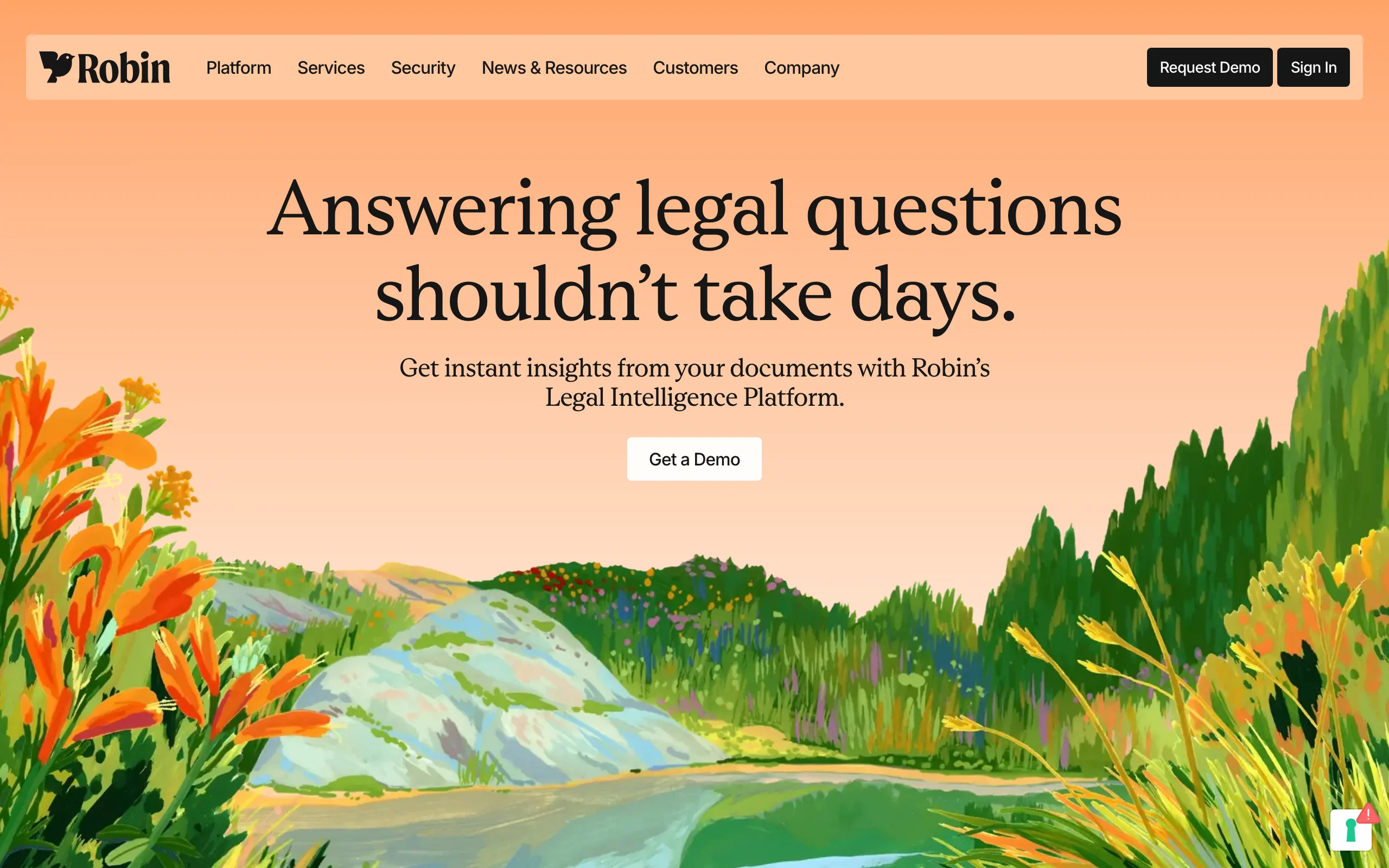
Robin AI is a contract-focused agent for teams that push a lot of agreements through review. It reviews and redlines contracts, compares clauses against your playbooks, answers questions about specific terms, and generates reports. A free tier lets you try it, and the Pro plan adds unlimited messages and uploads for small teams, with enterprise features like centralized obligations management and bespoke playbooks above that.
If contract review is your bottleneck, Robin AI is purpose-built for it. For a wider look at this category, see our roundup of AI contract review tools.
Key features:
- AI contract review and redlining against your standards
- Clause comparison and obligations management
- Custom playbooks and review reports
- Free tier plus paid team plans
Best for:
- In-house and firm teams with high contract volume
- Operations teams standardizing review against playbooks
Pricing:
- Free tier (limited daily messages)
- Pro: $100/user/month (unlimited messages and uploads, small teams)
- Enterprise: custom (SSO, unlimited users, bespoke playbooks)
Pros:
- Free tier and clear per-seat Pro pricing make it easy to start
- Focused, capable contract review and clause comparison
Cons:
- Narrower than an all-in-one agent; built around contracts
- Advanced features require the enterprise tier
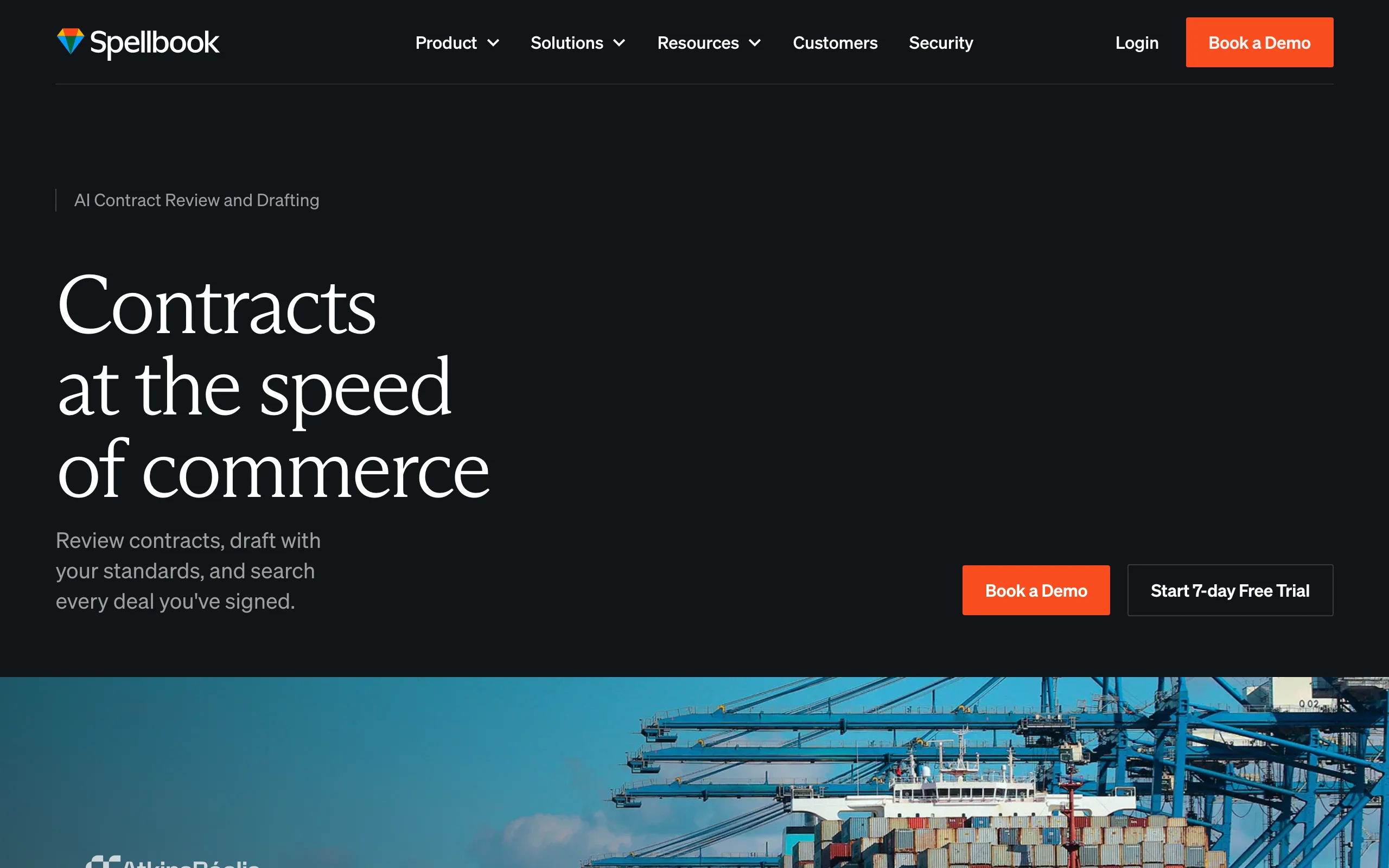
7. Spellbook, best for drafting inside Microsoft Word
Spellbook lives where many lawyers already draft: Microsoft Word. It suggests and drafts clauses as you type, redlines and reviews uploaded contracts, benchmarks language against thousands of contract types, and supports custom playbooks. For transactional lawyers who do not want to leave their document, the in-Word experience is the main appeal.
It is a drafting and review specialist rather than a research agent.
Key features:
- AI drafting and clause suggestions inside Word
- Redlining and review of uploaded contracts
- Clause benchmarking across thousands of contract types
- Custom playbooks; SOC 2 Type II, GDPR, CCPA compliance
Best for:
- Transactional and contract lawyers who draft in Word
- Small and mid-size firms wanting an in-document assistant
Pricing:
- Quote-based; not publicly listed
- Third-party estimates start around $99/user/month, with higher enterprise tiers and minimum commitments
Pros:
- Works inside Word with no change to drafting habits
- Strong clause library and benchmarking
Cons:
- Pricing is opaque and quote-only
- Focused on contracts, not research or litigation
8. Paxton AI, best for self-serve US research
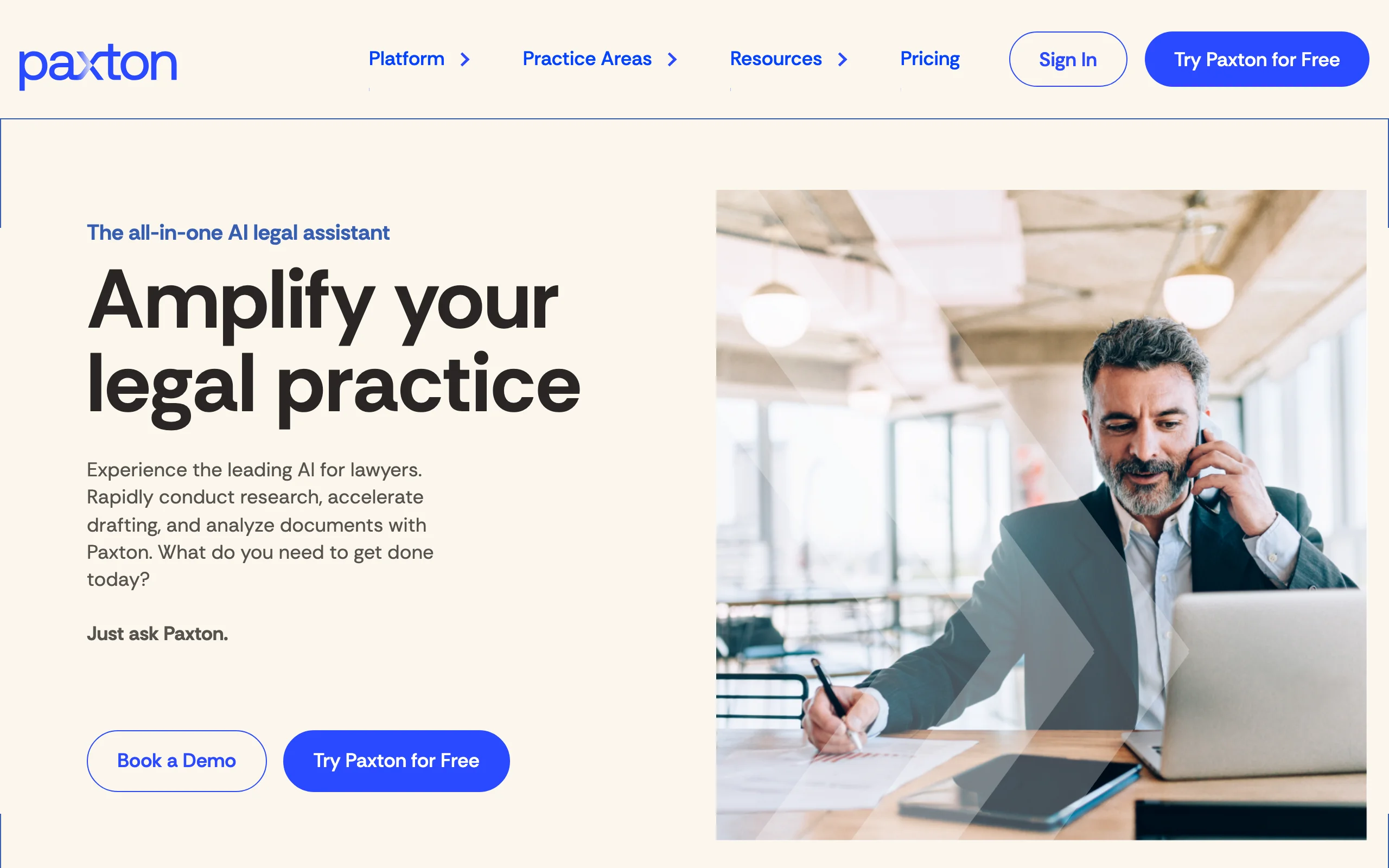
Paxton AI is an all-in-one legal AI assistant with one thing most enterprise tools lack: published, self-serve pricing. It drafts documents, analyzes files, and researches across US federal regulations, state laws, and case law in all 50 states, and it carries SOC 2, ISO 27001, and HIPAA certifications. A 7-day free trial lets you test before committing.
It is a capable individual research agent, though at $499/user/month it costs noticeably more than LegesGPT for a solo lawyer.
Key features:
- Legal research across US federal and 50-state case law
- Document drafting and file analysis with recommendations
- Medical chronologies and billing summaries
- SOC 2, ISO 27001, and HIPAA certifications
Best for:
- Solo and small-firm attorneys who want US-focused research
- Lawyers who prefer transparent, self-serve pricing
Pricing:
- Individual: $499/user/month or $2,999/user/year (50% off annual)
- Enterprise: custom, volume-based
- 7-day free trial
Pros:
- Transparent pricing and a real self-serve trial
- Broad US legal coverage with strong compliance certifications
Cons:
- Pricey for a solo lawyer compared with LegesGPT
- US-focused; less suited to cross-border work
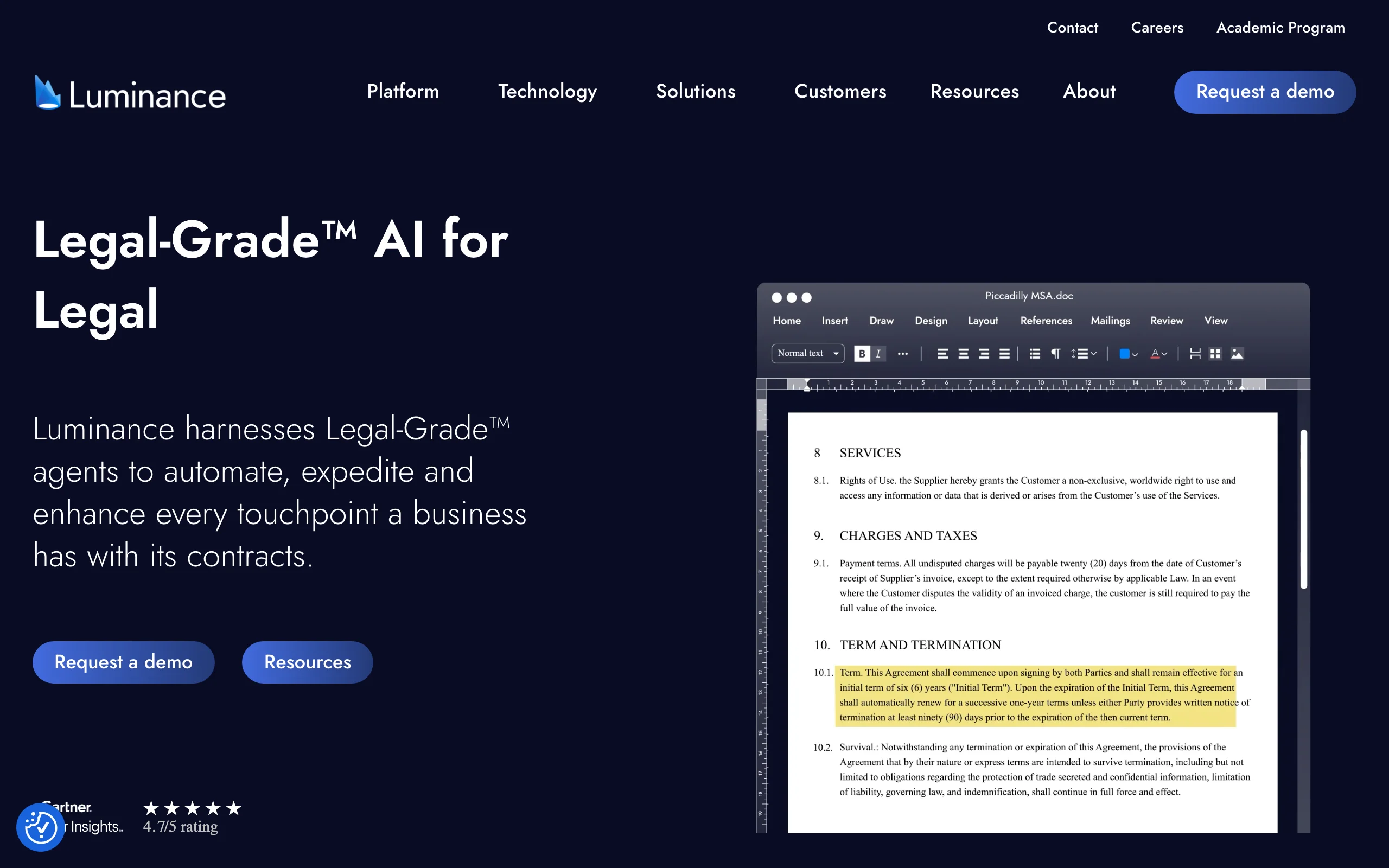
9. Luminance, best for enterprise contract automation
Luminance applies legal-specific AI across the contract lifecycle, from review and due diligence to negotiation. Its agentic features can automatically redline and negotiate routine contracts against a company's positions, and its pattern-recognition surfaces anomalies across large contract sets. It is aimed at enterprises and large firms that want to automate contract work at scale rather than assist a single drafter.
Key features:
- AI review and due diligence across the contract lifecycle
- Automated redlining and negotiation of routine agreements
- Anomaly detection across large contract portfolios
- Enterprise integrations and admin controls
Best for:
- Enterprises and large firms automating high-volume contracting
- Legal ops teams standardizing negotiation positions
Pricing:
- Custom, enterprise-only; demo and sales process required
Pros:
- Strong automation across review and negotiation
- Scales across large contract portfolios
Cons:
- Enterprise pricing and onboarding; not for solo use
- Contract-centric rather than a general legal agent
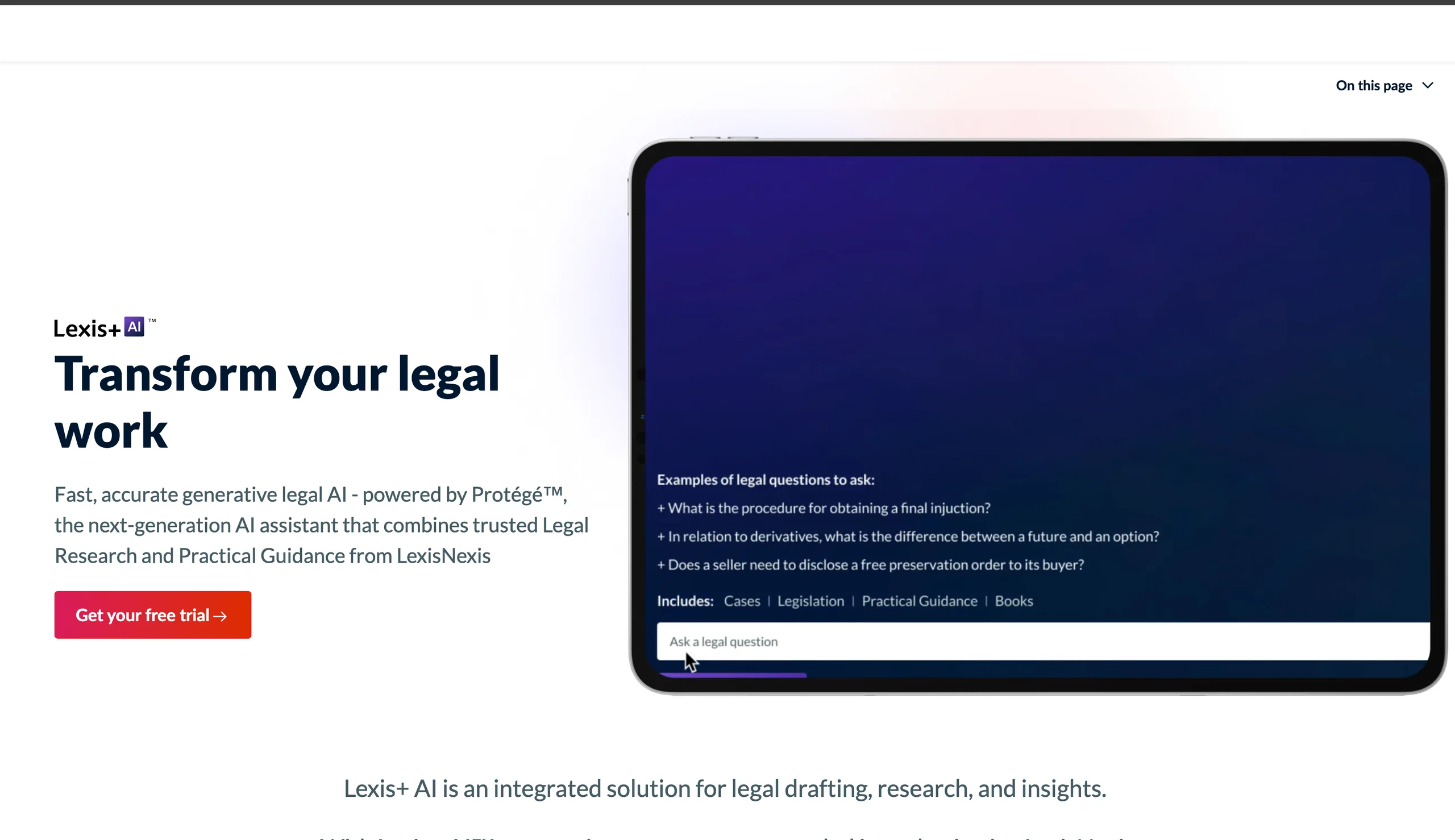
10. Lexis+ AI, best for LexisNexis-standardized teams
Lexis+ AI brings generative and agentic AI to the LexisNexis platform, with conversational search, drafting, summarization, and document analysis grounded in Lexis content. Its Protégé assistant personalizes to your work and adds agentic capabilities for multi-step tasks. For firms already standardized on LexisNexis, it keeps research and citations inside content they license and trust.
Key features:
- Conversational legal research grounded in Lexis content
- Drafting, summarization, and document analysis
- Protégé personalized AI assistant with agentic tasks
- Citation support tied to LexisNexis sources
Best for:
- Firms and departments already on LexisNexis
- Researchers who want answers tied to licensed Lexis content
Pricing:
- Custom; sold as an add-on to Lexis+ subscriptions, quote-based
Pros:
- Grounded in trusted, licensed legal content
- Natural fit for existing LexisNexis customers
Cons:
- Best value only if you already pay for Lexis+
- No transparent self-serve pricing
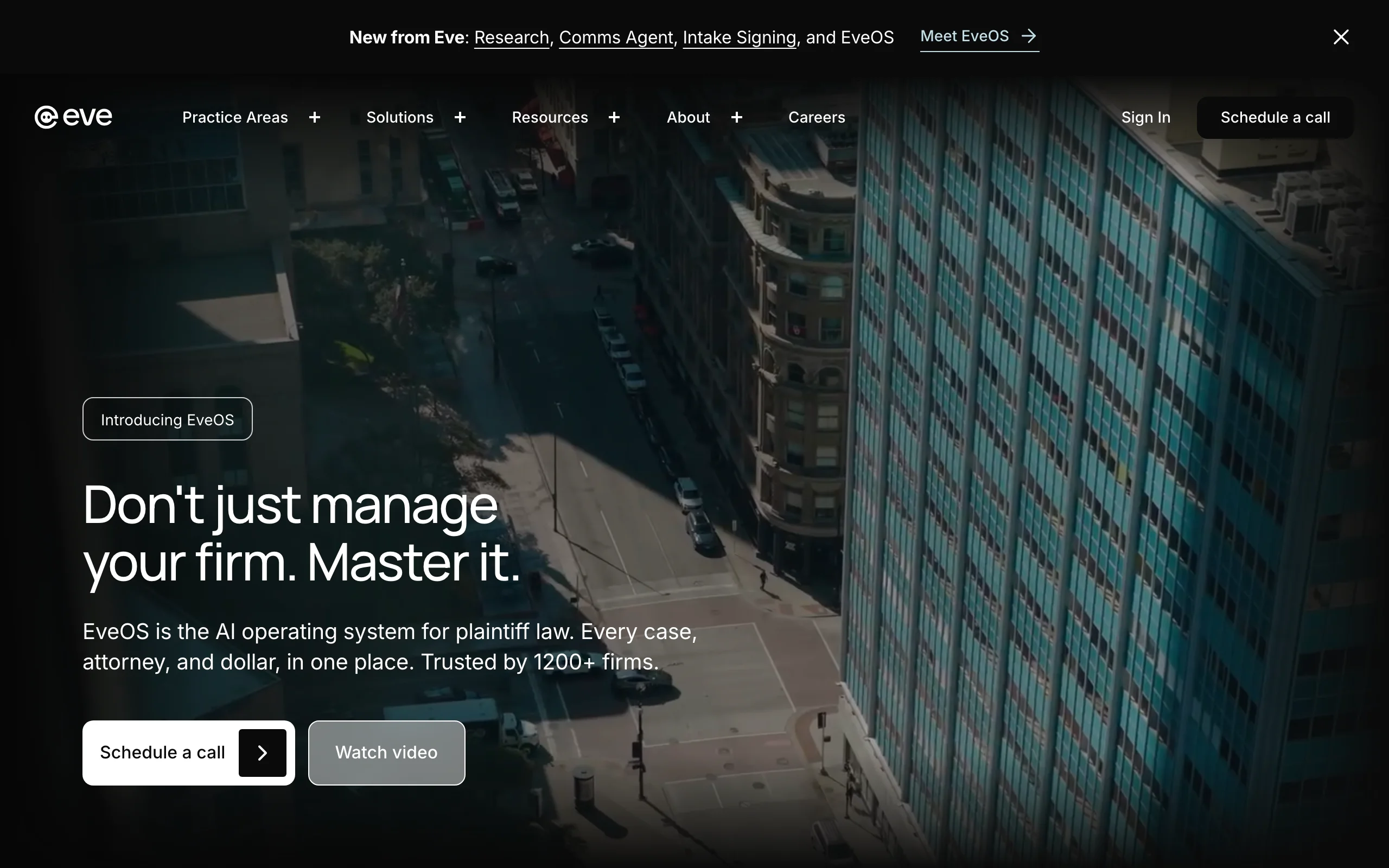
11. Eve, best for plaintiff and personal injury firms
Eve is a legal AI platform built specifically for plaintiff-side and personal injury firms, with agents that span the case lifecycle from intake to resolution. Its agents draft demands, discovery, and motions, chase records, and handle routine calls, while a Voice AI intake agent screens incoming calls and an Auditor reviews active matters nightly to surface treatment gaps and valuation drivers. Eve reports adoption by hundreds of plaintiff firms.
If you run a plaintiff or PI practice, Eve's workflows map to your case flow more directly than a general agent.
Key features:
- Agents for demand drafting, discovery, motions, and records retrieval
- Voice AI intake that screens and evaluates incoming calls
- Nightly Auditor that flags gaps and valuation drivers
- Plain-English analytics across the practice
Best for:
- Plaintiff-side and personal injury firms
- Practices that want intake-to-resolution automation
Pricing:
- Custom; demo and sales process required
Pros:
- Purpose-built for plaintiff and PI workflows
- Agents cover intake, drafting, and case auditing end to end
Cons:
- Narrow focus; not for transactional or general practice
- Custom pricing with no self-serve entry
How to choose the best legal AI agent for your practice
The right agent depends on your practice size, your budget, and the content you already pay for. Test three to five of your own real documents or questions through any tool before committing, and check whether it cites sources you can verify.
1) How big is your firm and budget?
- Solo or small firm: start with LegesGPT for an all-in-one agent at a self-serve price, or Paxton AI if you want US research with published pricing.
- BigLaw or large enterprise: Harvey AI, CoCounsel, or Hebbia for firm-wide deployment, with the budget and procurement to match.
2) What work do you need the agent to do?
- Everything (research, review, drafting, signing): LegesGPT covers the whole workflow in one subscription.
- Mostly contracts: Robin AI for high-volume review, Spellbook for in-Word drafting, Luminance for enterprise automation.
- Plaintiff and PI casework: Eve maps to intake-to-resolution workflows.
3) What content and tools are you already on?
- Westlaw and Practical Law: CoCounsel layers agents on content you trust.
- LexisNexis: Lexis+ AI keeps research inside Lexis content.
- No legacy stack: a self-serve agent like LegesGPT avoids paying for a research database on top.
4) Standalone or layered on existing tools?
- Want one tool that replaces several: LegesGPT consolidates research, review, and drafting.
- Want to add agents to your current platform: CoCounsel, Lexis+ AI, or Spellbook (in Word) extend what you already use.
For a broader category view beyond agents, see our guides to the best legal AI tools and AI legal research tools. Enterprise teams evaluating a rollout can contact us with questions.