LexisNexis is one of the two pillars of legal research, with deep primary law, the Shepard's citator, and an AI assistant, Protégé, layered on top. It is also premium-priced and sold the way Westlaw is: quote-based, on multi-year contracts, with AI features that often ride on a base subscription. If your Lexis renewal is climbing faster than your usage, it is worth looking at what else is out there.
The alternatives fall into three camps: full databases that rival Lexis head-on, affordable AI assistants that answer everyday questions faster, and budget or bar-provided options. In this guide we compare the best LexisNexis alternatives, with verified pricing where it exists and honest notes on what each one does and does not replace.
Best LexisNexis alternatives: a quick overview
- LegesGPT: Best value alternative for solos and small firms. Cited AI answers, case law and statute search, document review, and drafting in one subscription from $13.99/month.
- Westlaw: Best head-to-head database rival, with comparable primary law, the KeyCite citator, and CoCounsel AI.
- Bloomberg Law: Best for flat-fee pricing and firms that want research plus business and news intelligence.
- vLex Fastcase: Best budget route, free through many bar memberships, with global coverage and Vincent AI.
- Paxton AI: Best transparent, self-serve AI research tool with a published price.
| Tool | Best for | Starting price | Free trial / tier | Type |
|---|---|---|---|---|
| LegesGPT | All-in-one for solo & small firms | From $13.99/mo | 3-day, $1 | AI assistant |
| Westlaw | Head-to-head database rival | Quote-based | Demo only | Database + AI |
| Bloomberg Law | Flat-fee research + business intel | Quote-based | Demo only | Database + AI |
| vLex Fastcase | Budget / bar-membership access | Free via 40+ bars | Bar benefit | Database + AI |
| Paxton AI | Transparent self-serve research | $499/user/mo | 7-day free | AI assistant |
1. LegesGPT, best value alternative to LexisNexis
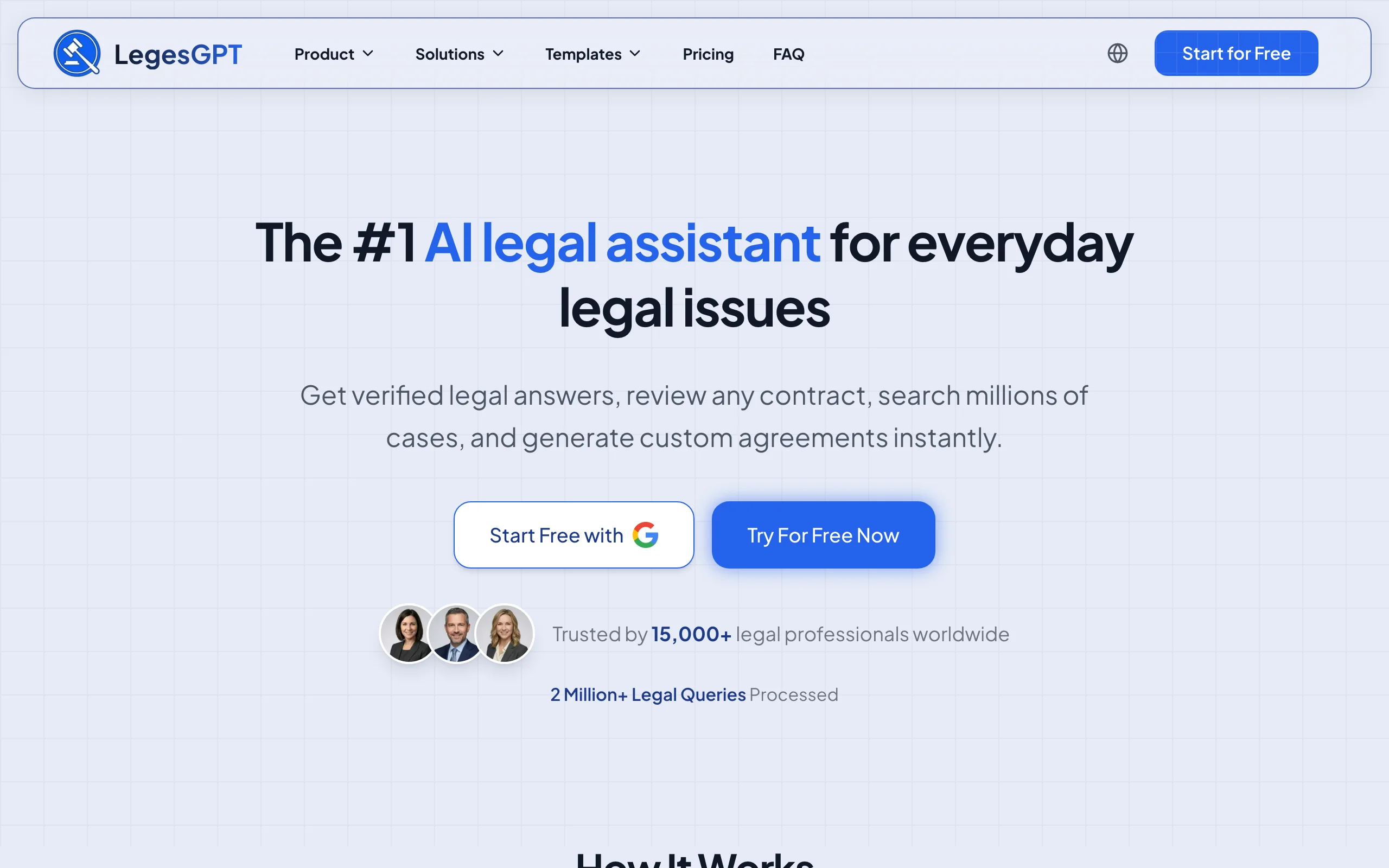
LegesGPT replaces much of what solos and small firms actually use Lexis for, cited legal answers and case law lookups, at a fraction of the cost. It answers legal questions with verified citations and direct source links, searches case law and statutes across 38+ jurisdictions, reviews uploaded documents for risk, and drafts contracts and legal documents, all self-serve in one browser subscription. There is no sales cycle, no multi-year contract, and no base-plus-AI pricing puzzle.
It is an AI assistant, not a full primary-law archive with a Shepard's-style citator, so it complements rather than fully replaces a deep database. But for the volume of routine questions a small practice handles, a cited answer in seconds is the better trade most days.
Key features:
- Verified-citation answers with links to the underlying authority
- Case law and statute search across 38+ jurisdictions
- AI document review that flags risks and proposes changes
- AI drafting of contracts and legal documents
- Deep Research mode and web search for multi-step and recent questions
Best for:
- Solo practitioners and 2-50 attorney firms priced out of Lexis
- In-house counsel who want fast, cited answers without a database contract
- Teams that want research, review, and drafting in one affordable tool
Pricing:
- Basic $13.99/month: unlimited AI queries, case law and statute search, citation verification
- Plus $34.99/month: adds document upload and 50 document reviews per month
- Premium $69.99/month: adds unlimited document review, Deep Research, and web search
- 3-day trial for $1; about 30% off annual billing
Pros:
- A fraction of Lexis's cost with transparent, self-serve pricing
- Cited answers plus document review and drafting in one place
- Real trial so you can test it on your own questions
Cons:
- Not a full primary-law database, so exhaustive research still needs one
- No dedicated citator like Shepard's for negative-treatment flagging
- Web-only, with no native mobile app or Word add-in
For the wider field, see our roundup of the best legal AI tools.
2. Westlaw, best head-to-head database rival
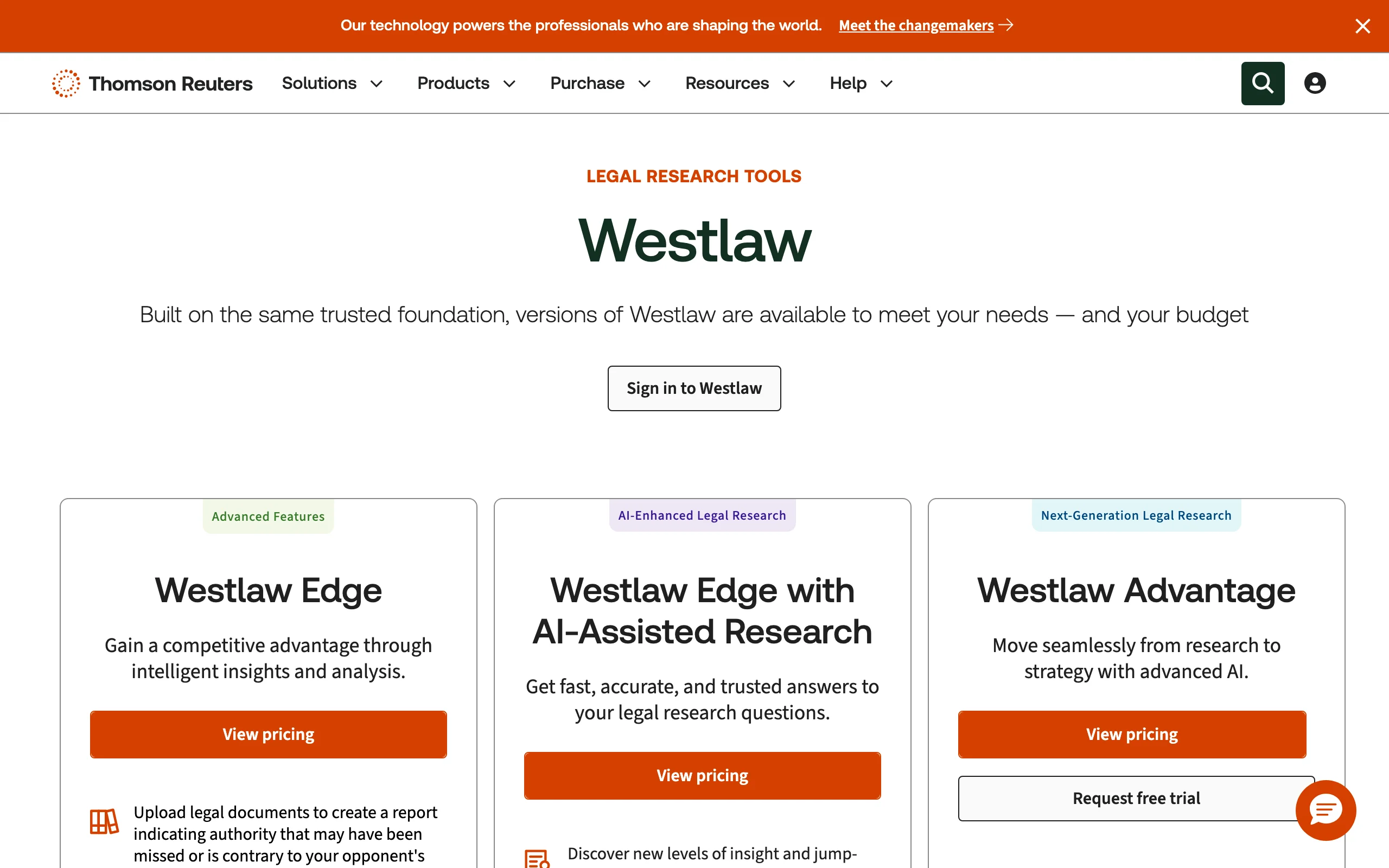
Westlaw, from Thomson Reuters, is Lexis's direct competitor and the most natural like-for-like switch. It offers comparable primary-law depth, the KeyCite citator for good-law validation, the Key Number System for topic navigation, Litigation Analytics, and CoCounsel AI drafting inside Word. Thomson Reuters has been rebranding the premium tier toward Westlaw Advantage with agentic Deep Research. For a firm that wants Lexis-scale research from the other major vendor, Westlaw is the answer.
The catch is that it solves the vendor question, not the cost one: Westlaw is priced at the same premium tier as Lexis, with the same quote-based, multi-year model.
Key features:
- Comprehensive primary and secondary law
- KeyCite citator for good-law validation
- Key Number System for topic-based navigation
- Litigation Analytics on judges, courts, and counsel
- CoCounsel AI research and drafting in Word
Best for:
- Firms wanting Lexis-class depth from the other major vendor
- Litigation-heavy practices that rely on analytics and a citator
- Teams comfortable with a premium research contract
Pricing:
- Not published; quote-based, premium, on multi-year terms
- Demos and trials arranged through a sales rep
Pros:
- Depth and authority on par with Lexis
- Strong citator, analytics, and integrated AI
- Backed by Thomson Reuters' scale
Cons:
- Premium pricing, no cheaper than Lexis
- Quote-based with multi-year lock-in
- Overkill for many solos and small firms
3. Bloomberg Law, best for flat-fee pricing and business intelligence
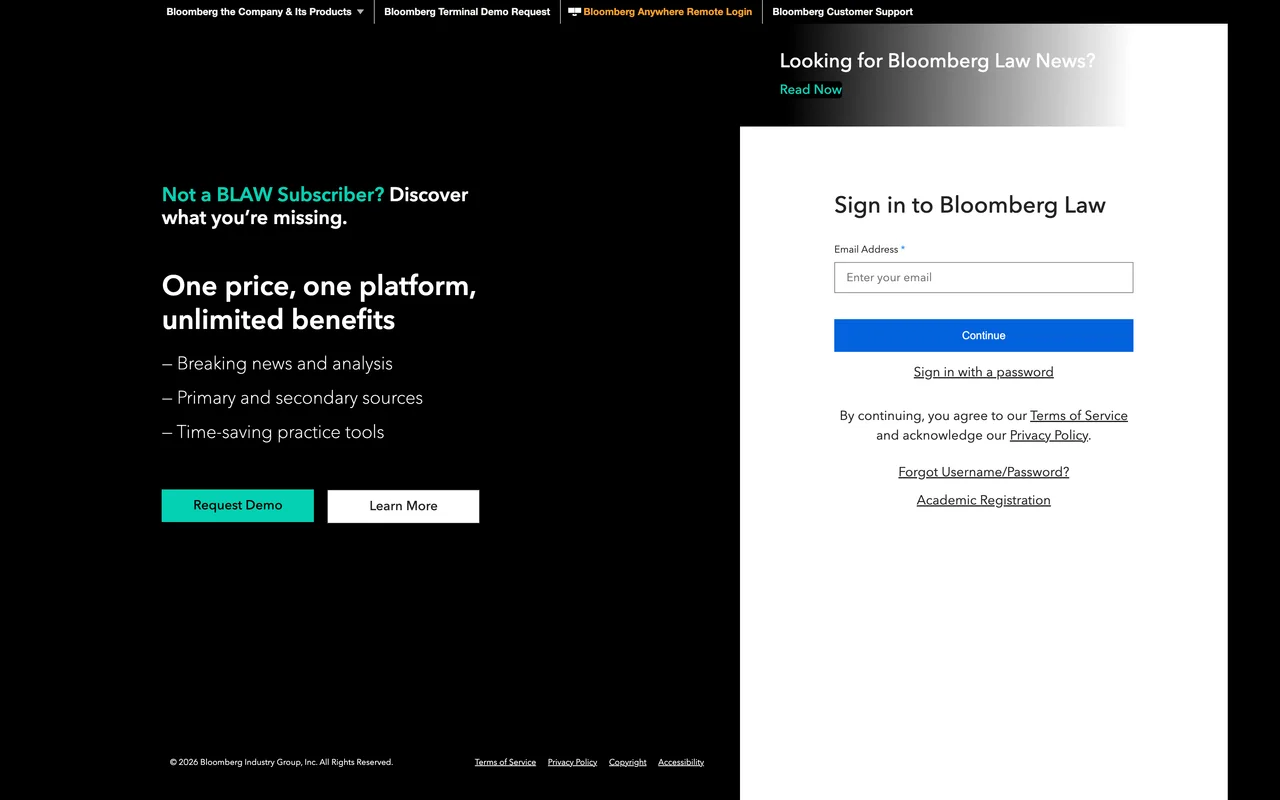
Bloomberg Law is the third major research platform, and its calling card is flat, all-inclusive pricing rather than a la carte libraries. It pairs legal research with business and news intelligence, comprehensive dockets, Litigation Analytics, Points of Law, Practical Guidance, and the Brief Analyzer AI tool with the BCite citator. For firms frustrated by Lexis's add-on pricing, Bloomberg's predictability is a real draw.
It is still a premium product, so it competes with Lexis on value and breadth rather than on being cheap.
Key features:
- Comprehensive dockets included in the subscription
- Litigation Analytics and Points of Law
- Brief Analyzer AI and the BCite citator
- Practical Guidance for transactional work
- Integrated business and news intelligence
Best for:
- Litigation and corporate teams wanting dockets and analytics
- Firms that prefer predictable, flat-fee billing
- Practices that use business data alongside legal research
Pricing:
- Not published; pricing by request, in the premium flat-fee range per attorney
- Demo by request, with no public free trial
Pros:
- Predictable flat-fee pricing with dockets included
- Strong analytics and business intelligence
- Modern generative-AI research with source attribution
Cons:
- Premium pricing, not a budget alternative
- No public free trial
- Broader than a routine research user needs
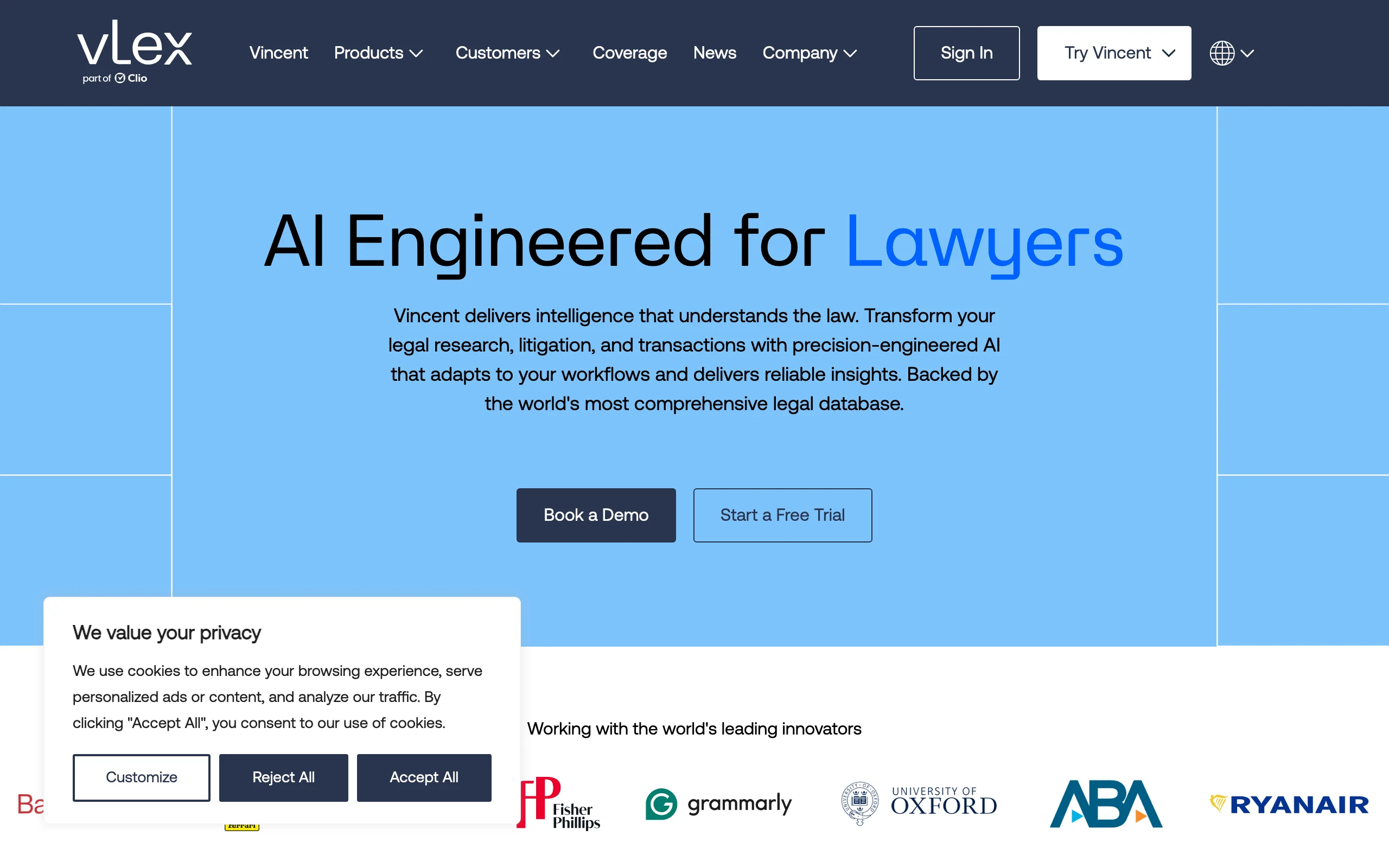
4. vLex Fastcase, best budget and bar-membership route
vLex Fastcase is the value play. Fastcase merged with vLex in 2023, and the combined platform is now owned by Clio after a billion-dollar acquisition that closed in late 2025. Its standout benefit is free access for members of 40 or more state and local bar associations, alongside Vincent AI for research and drafting and unusually strong global coverage. If your bar includes it, you get a capable research platform for the cost of dues you already pay.
It is the clearest way to cut a Lexis bill to near zero for core primary-law research, with the caveat that the most advanced AI features may be a paid add-on.
Key features:
- Full US case law, statutes, regulations, and court rules
- Free access through 40+ bar associations
- Vincent AI for research and drafting
- Global coverage across many jurisdictions
- Cert citator and Word and Chrome integrations
Best for:
- Solos and small firms whose bar membership includes it
- Cost-conscious lawyers wanting solid primary law
- International or multi-jurisdiction research
Pricing:
- Free to members of 40+ state and local bar associations
- Full platform and premium Vincent AI are quote-based outside the bar benefit
Pros:
- Free or very low cost through bar memberships
- Strong global coverage and modern AI
- Backed by Clio's ecosystem
Cons:
- Advanced Vincent AI is often a paid add-on within the bar benefit
- Interface and branding are still in transition
- US analytics trail Lexis and Bloomberg
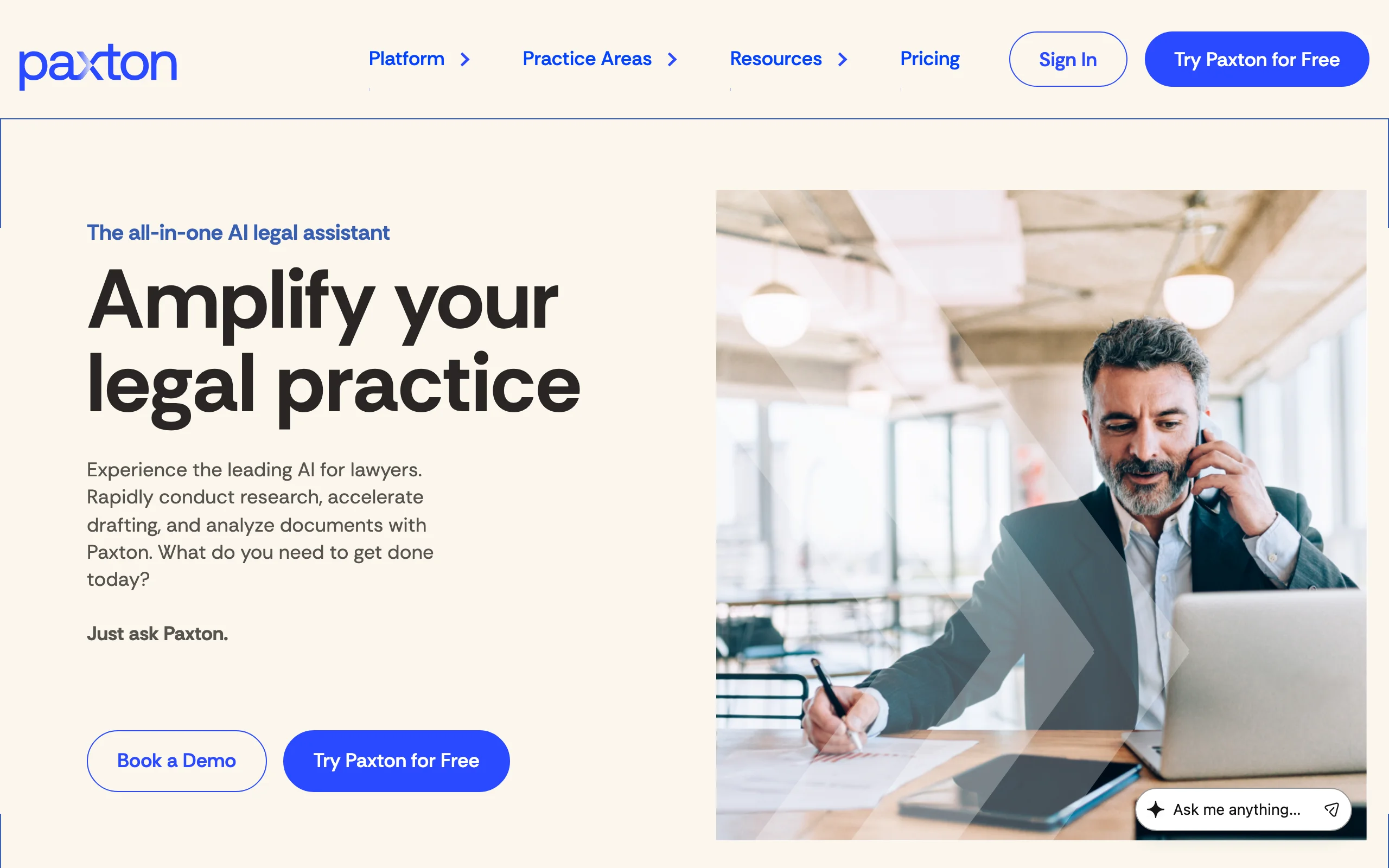
5. Paxton AI, best transparent self-serve research
Paxton AI is the rare legal research tool that publishes its price and lets you sign up yourself. It covers research across US federal regulations, all 50 states, and case law, and adds an AI citator with a confidence indicator, drafting, file analysis, and litigation tools like medical chronologies. It holds SOC 2, ISO 27001, and HIPAA certifications and markets itself openly as a Lexis, Westlaw, and CoCounsel alternative.
For a small firm that wants an enterprise-grade research assistant without the enterprise sales process, Paxton is a clean choice, though it costs more than an all-in-one tool like LegesGPT.
Key features:
- Research across federal regulations, all 50 states, and case law
- AI citator with a confidence indicator
- AI document drafting and file analysis
- Medical chronologies and billing summaries for litigation
- SOC 2, ISO 27001, and HIPAA compliance
Best for:
- Small and midsize firms wanting transparent, self-serve pricing
- Litigation practices that value the citator and medical tooling
- Buyers who insist on a published price and a trial
Pricing:
- Individual $499 per user per month, or $2,999 per user per year
- Enterprise custom pricing
- 7-day free trial
Pros:
- Transparent published pricing and a self-serve trial
- Solid research coverage plus a citator with confidence scoring
- Litigation-specific tools built in
Cons:
- Far pricier than LegesGPT for overlapping core research
- Narrower all-in-one workflow than a full platform
- Some performance metrics are vendor-reported
How to choose the best LexisNexis alternative for your practice
The right move depends on how much of Lexis you truly use, how you prefer to buy, and your budget. Work through these questions.
1) Do you need a full database, or fast cited answers?
- If you mostly ask everyday legal questions and draft: an AI assistant like LegesGPT or Paxton AI is faster and far cheaper.
- If you run exhaustive primary-law research with citator validation: a full database like Westlaw or Bloomberg Law is closer to Lexis.
Audit a month of your own searches. Many firms pay Lexis rates for depth they rarely touch.
2) What is your budget?
- Tight budget or solo: LegesGPT from $13.99/month, or vLex Fastcase free through your bar.
- Mid-market wanting a published price: Paxton AI.
- Firm with a full-database budget: Westlaw or Bloomberg Law.
3) How much does the citator matter?
- Critical (appeals, litigation): keep a tool with a real citator, KeyCite on Westlaw, BCite on Bloomberg, or the Cert citator on vLex Fastcase.
- Helpful but not essential: LegesGPT's verified citations with source links let you read and confirm each authority.
4) Test before you renew
Before signing another Lexis term, run three to five of your real questions through a shortlist. LegesGPT and Paxton AI offer trials, and vLex Fastcase is free to test through your bar. For many solos and small firms, an affordable assistant like LegesGPT for daily work plus a lean database for deep research beats a single premium Lexis contract on both cost and speed.